
The next generation of Opus is here.
On May 4, 2026 we began releasing the next generation of our Opus platform. Every core component has been rebuilt from the ground up, not just to do the same things better, but to do something fundamentally different. Opus is no longer just a workflow automation tool. It’s a governed system for how enterprises design, run, and continuously improve the way work gets done.
Opus automates regulated Business Processes with Agentic AI. We designed it for the people who own the Business Process, and the teams who have to trust it. Business Process owners take the wheel. IT stays in control.
We organized the product around six modules: (A) Digital Twin, (B) Discover, (C) Build, (D) Run, (E) Optimise, and (F) Govern. Alongside them, a team of Opus Build Agents works with custom Run Agents (you build once, reuse everywhere), plus twenty new features that bring them together.
Here’s what you can expect.
A. Visualize your Digital Twin
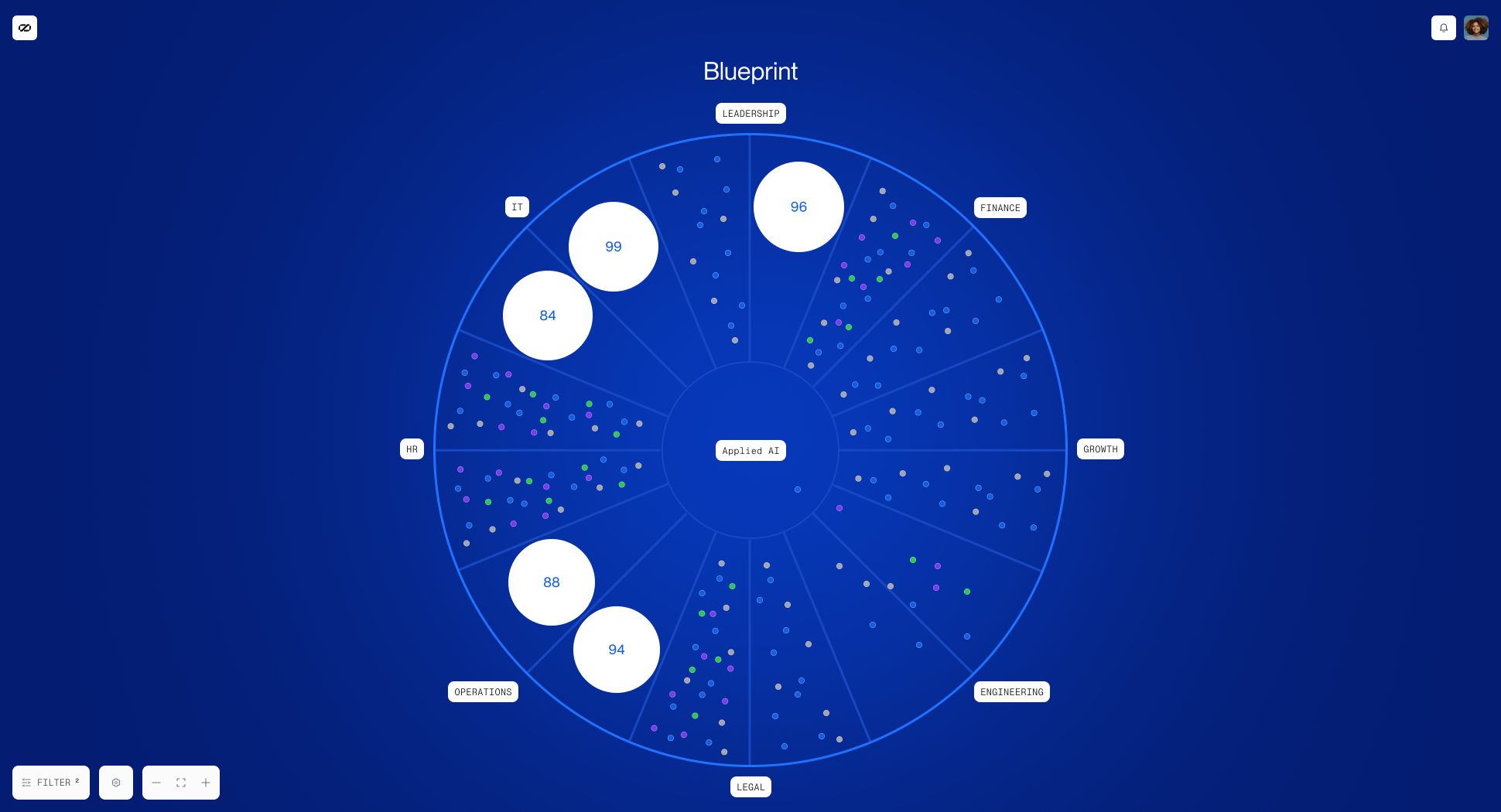
A living model of your automated enterprise helps you see how agents and humans come together in a hybrid workforce.
What did we launch
#1 - Blueprint: A unified view of your enterprise that brings every mapped Business Process, Workflow, running Case, and logged decision into a single living model.
Why it’s powerful
Operational models used to live in consulting decks and stale PDFs. The Digital Twin replaces them with a model that’s running, executing, and learning in real time. It’s also the substrate the other five modules feed into: the more you discover, build, run, and optimise, the more your Digital Twin reflects your actual enterprise. You stop describing how work happens. You watch it happen.
B. Discover the possibilities
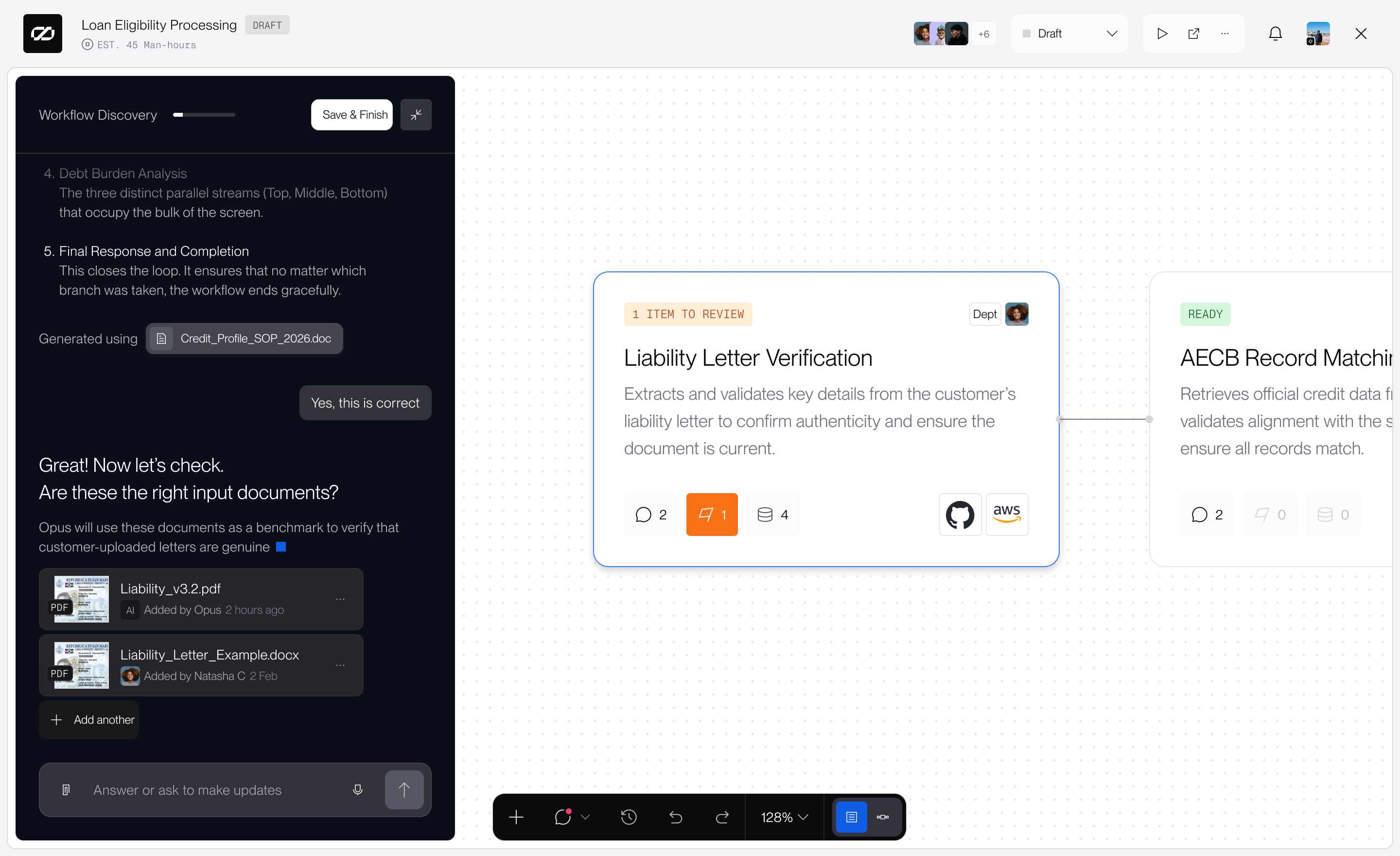
See what your Business Processes are actually costing you before you automate.
What did we launch
#2 - Process Discovery: A collaborative tool process owners and their teams use to map an existing process and drive shared understanding. Stakeholders document each step as a task or decision, capturing integrations, business rules, estimated durations, pain points, departments, inputs, outputs, and more. Each step is assigned to a single person responsible for approving it, and the Business Process owner gives final approval before automation begins.
#3 - AI-first Workflow Generation: While most are asking “Where should I add AI into my process?” we believe the better question is often “Where should I add humans into my AI-first process?” Hand any Business Process to Opus and have it redesign for you, AI-first. Powered by our Large Work Model trained on over 1.3 million Business Processes across regulated industries, Opus Build Agents will keep your start and end points while offering you a more efficient design that includes human-in-the-loop or agent reviews that deliver control while improving efficiency.
Why it’s powerful
There are three interpretations of processes at a company: (i) the process that is documented; (ii) the process that management believes is happening; (iii) what is actually happening. Our new Discovery tool closes the gap between them, and invites people who know how work happens but don’t think in nodes and variables. After using the tool, you can see what your Business Processes are actually costing you, then decide what to automate. However, the value isn’t in perfect mapping; it’s in what comes next. Once a Business Process is mostly mapped, you choose: automate with AI as it runs today, or have Opus reimagine it AI-first. The Large Work Model doesn’t replicate what you do today. It shows you what the work could look like if you started from scratch. Customers tell us this is where the biggest shifts in thinking happen.
C. Build your workflows
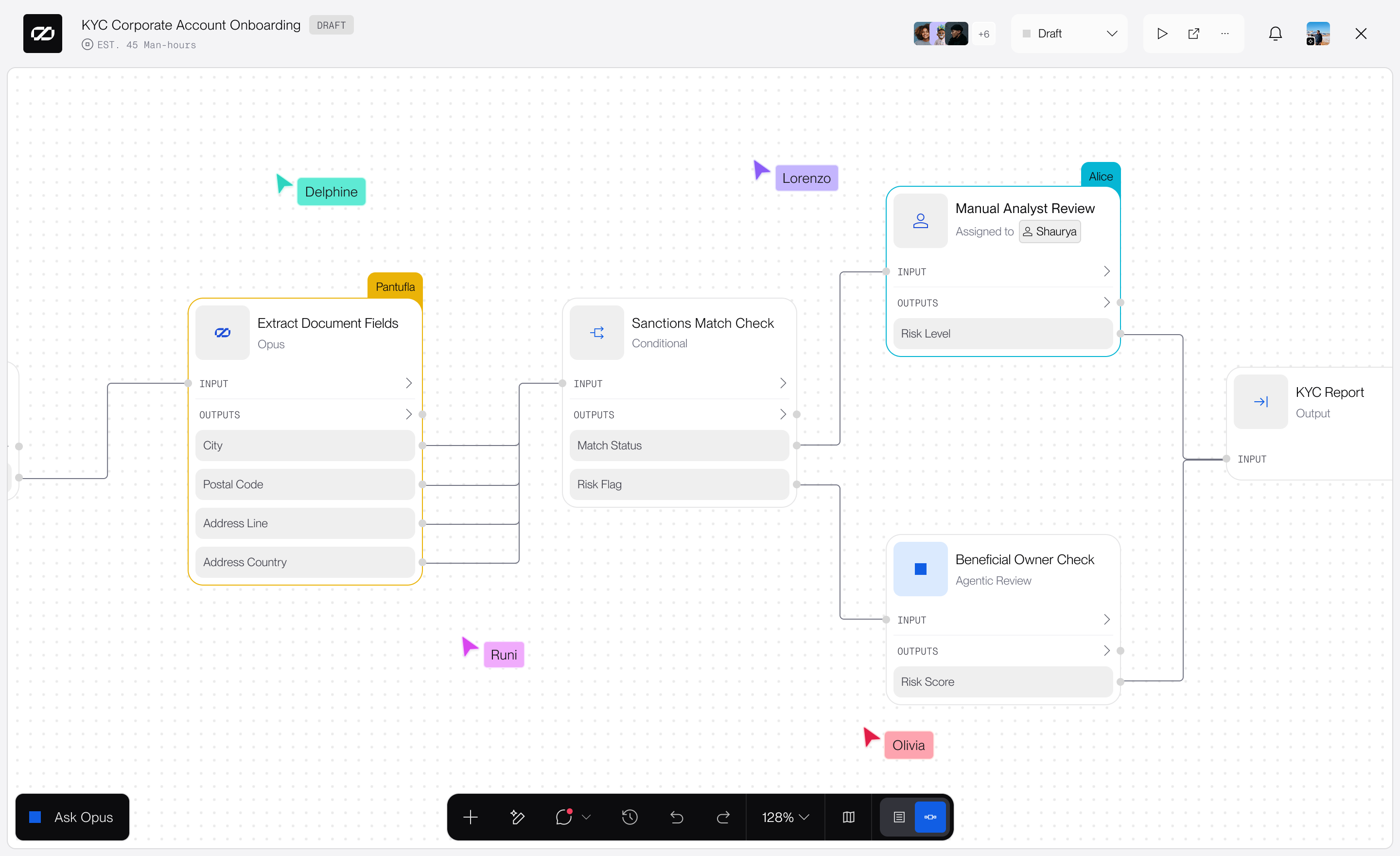
Watch agents rewire your Business Process on an intelligent canvas, with your team in control.
What did we launch
#4 - Opus Build Agents: This team includes the Process Architect, Policy Officer, Risk Manager, System Integrator, Prompt Engineer, Code Agent, Data Scientist, Quality Assurance, AI Transformation Specialist, and Layout Designer, all orchestrated by a Workflow Coordinator. Each one knows its job, improves with use, and is supervised by humans where it matters.
#5 - Custom Run Agents: Browse a selection of pre-built Agents, or build your own and store them in your organization’s marketplace for reuse.
#6 - Improved Workflow Builder: A new builder gives you clearer structure and stronger node primitives, built for enterprise complexity.
#7 - Multiplayer Canvases: The Business Process Canvas and Technical Canvas are now real-time collaborative. You can leave comments on the canvas, chat with agents or your team, and refine Workflows together instead of in handoffs.
#8 - Opus Chat: An AI co-pilot embedded directly in the canvas drafts, refines, and rebuilds workflows alongside you as you describe what you want.
#9 - Sub-workflows: Build deeply nested, fully reusable sub-workflows that support human reviews and asynchronous processes inside them.
#10 - Component Library: Agents, integrations, code, human tasks, and shared variables now live in a modular library, all reusable across workflows.
#11 - Agent Playground: Test, refine, and validate agents before they touch production Workflows.
#12 - Variable Typing: Variable typing and handling are now stricter across every Workflow.
Why it’s powerful
Enterprise complexity is finally a first-class citizen: large documents, multi-system decisions, compliance checks, long-running operations, human review loops, all native and handled. And the people doing the work can now do it together. Collaboration stops being a handoff. Process owners, builders, and reviewers work the same canvas in real time, leaving comments where decisions need to happen and aligning in group chat. No more screenshot ping-pong between teams. One Workflow also becomes a unit of reuse: a bank can define a single customer verification Sub-workflow and call it across onboarding, lending, compliance, and account maintenance. Define once. Reuse everywhere. And under the hood, stricter data flow means Workflows fail less, debug faster, and provide the reliable foundation that agentic execution depends on.
D. Run your business
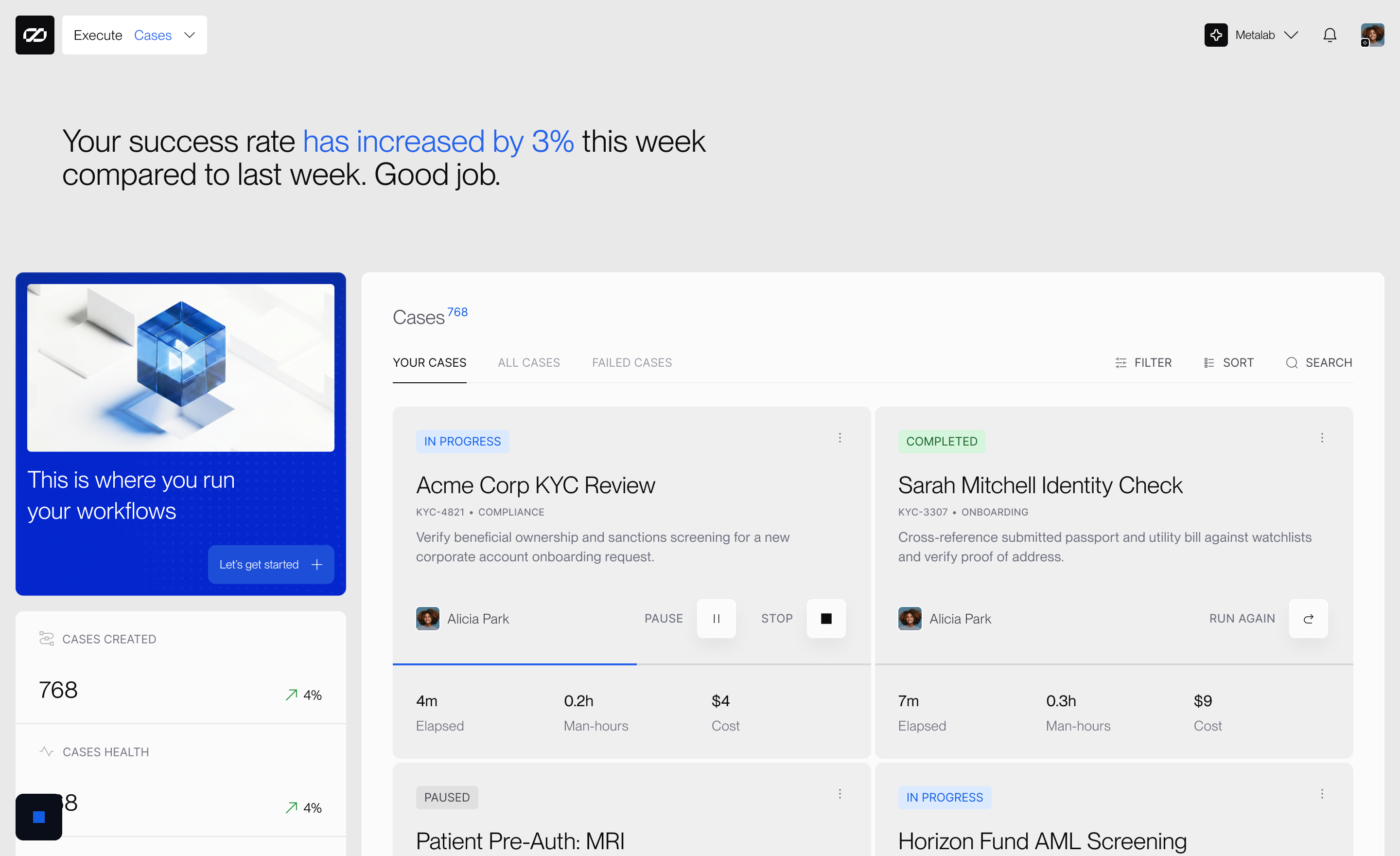
Powered by agents, guided by humans, at a speed that wasn’t possible before.
What did we launch
#13 - New Execution Engine: A new execution engine powers production-grade enterprise Workflows.
#14 - Cases and Jobs Interface: A Case is the execution of a Workflow, and a Job is the execution of a human task within that Case. We’ve also improved the UI for both.
#15 - Channels: Trigger and interact with workflows through API, Scheduler, Email Agent, or Chat Agent. An email becomes a prompt, a chat becomes a persistent thread, and the Workflow runs the same way regardless of how it started.
Why it’s powerful
Enterprise Workflows aren’t linear. They branch, pause, wait for human review, call external systems, retry on failure. The new engine was built for exactly that reality, because in regulated industries, broken Workflows aren’t just inefficient, they’re a liability. Workflows define how a Business Process should run; Jobs and Cases are how it actually runs: tracked, auditable, manageable. Design once. Run at scale. Underneath it all: the agent loop is not a stateless prompt-response cycle. Each execution draws from prior traces, governed memory, skills, tools, model-dynamic routing, and organizational context to produce a controlled output. That’s what production reliability actually requires.
E. Optimise continuously
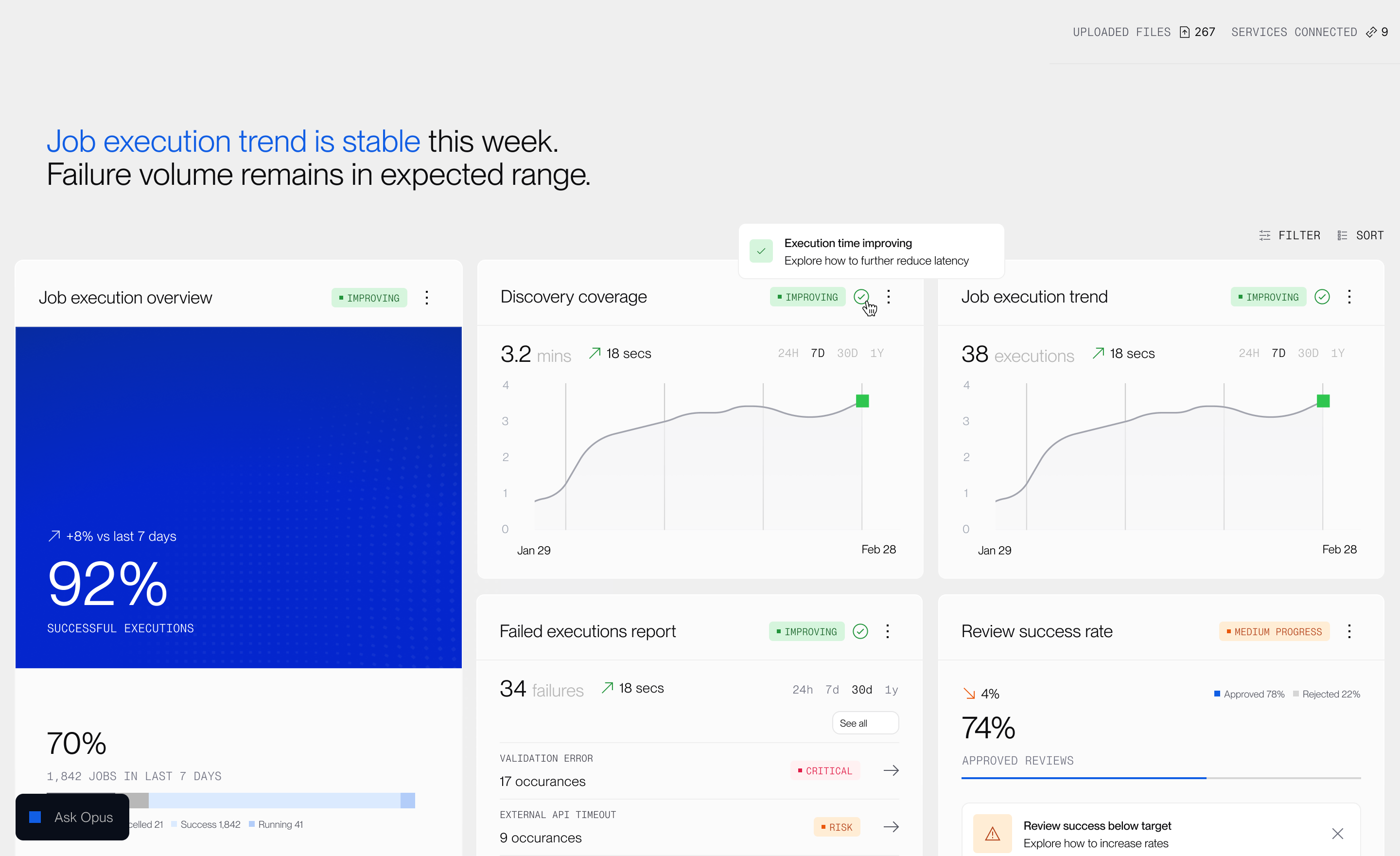
Every cycle gets smarter, faster, and cheaper. Your advantage compounds.
What did we launch
#16 - Design-time Memory: Opus now learns from patterns across users, agents, workspaces, and organizations.
Why it’s powerful
Opus agents improve through governed execution, reviewed traces, and reusable memory. Each agent draws on four pillars: Memory (persistent context from executions and reviews), Skills (structured execution methodology), Guidelines (behavioral rules and policies), and Learning (generalized patterns extracted from outcomes and feedback). Opus gets better at helping your teams design Workflows the longer it runs. Memory is scoped, permissioned, and governed: local context takes priority, agents only receive memory valid for their current scope, and there is no uncontrolled global memory layer. The result: your enterprise’s institutional knowledge stops living in people’s heads and starts compounding inside the platform.
F. Govern your enterprise
Security, compliance, and audit trails built in, not bolted on.
What did we launch
#17 - Versioning: Workflow Version IDs let you run Cases against specific Workflow versions, with full audit trails.
#18 - Attribute-Based Access Control (ABAC): ABAC gives you precise control over who can see, edit, run, review, and manage every resource.
#19 - Identity Provider (IdP) Compatibility: Opus plugs into your existing enterprise access management.
#20 - Policies: Define organization-wide policies, evaluate Workflows against them, and surface compliance posture in plain language.
Why it’s powerful
Versioning is the unlock for enterprise delivery: test, validate, and promote Workflow versions the same way engineering teams manage code, and know exactly which version ran a given Case at any point in history. ABAC matches the reality of regulated work, where workflow automation touches sensitive data and cross-functional teams; the permissions model has to match that complexity. IdP support means Opus aligns with how large organizations already manage users, access, and governance, with no parallel system, no new attack surface. Some Business Processes can’t share infrastructure with anyone. Others can. Opus supports both: choose Opus Cloud (managed and hosted by AppliedAI) or a Dedicated single-tenant deployment for organizations with sovereignty, data residency, or isolation requirements. Your deployment model matches your regulatory profile, not the other way around. And governance is layered by design (Platform → Organization → Workspace → Agent), every layer enforcing its own guidelines, no agent operating without scope.
If you’re already on Opus
Every Workflow you’ve built migrated automatically. No data loss. No re-platforming. Your existing Cases keep running, your traces are preserved, and your governance carries over to the new permissions model.
Existing customers will also see a new CENTRAL workspace, visible directly in your Digital Twin’s Blueprint view. CENTRAL holds resources (Workflows, Sub-workflows, agents, learnings) that are shared across every team in your organization. One source of truth, governed at every layer, available to everyone with the right permissions.
You used to have your workspace. Now you have your organization’s, too.
The future is here. It’s just not evenly distributed.
Opus exists to fix that. Workflow automation was the starting point. What we’re building is broader: a governed system that learns how your enterprise operates, encodes that knowledge into Workflows, runs them reliably at scale, and improves continuously, for every regulated enterprise.
…and we’re just getting started. Onwards!