Invoice creation & validation
TodayInvoices built by hand, prices and terms checked line by line.
OpusGenerates the invoice, cross-checks prices and terms, and flags issues before it goes out.

Opus works with your team to map how finance actually runs, and shows you what each change is worth before you make it. Then it builds the AI-first version with you, and runs it on top of the ERP you already use.

Some examples of the repeatable work finance teams hand to Opus, from daily invoice processing to monthly close.
TodayInvoices built by hand, prices and terms checked line by line.
OpusGenerates the invoice, cross-checks prices and terms, and flags issues before it goes out.
TodayVendor invoices matched to POs and contracts by hand.
OpusMatches invoices to the PO and contract, and routes mismatches for sign-off before payment.
TodayThe close run on spreadsheets and chase-up emails.
OpusAssigns and tracks close tasks, chases what's overdue, and gives leadership a live view.
TodayOverdue accounts chased manually and inconsistently.
OpusPrioritises accounts by age and risk, then sends the right dunning step.
TodayAudit evidence gathered by email, scattered across owners.
OpusCollects evidence from owners, checks it's complete, and compiles an audit-ready pack.
TodayReporting packs assembled by hand against shifting requirements.
OpusPulls and validates the data, fills the templates, and routes for sign-off.
Closing the books, chasing numbers, moving data between spreadsheets and systems that don't connect. You know AI could take some of it on, but not which parts or what they're worth. So any business case you build starts with a guess.
Most tools automate your process exactly as it runs today, including the broken parts. Opus designs a better version first, using a Large Work Model™ trained on millions of real business processes. Those are indexed by industry, sub-industry and jurisdiction, so what you see is built for finance teams like yours.
You review it step by step and approve, change or reject each one. Nothing gets built your team hasn't signed off, because a process you didn't shape is one you won't want to defend to an auditor.
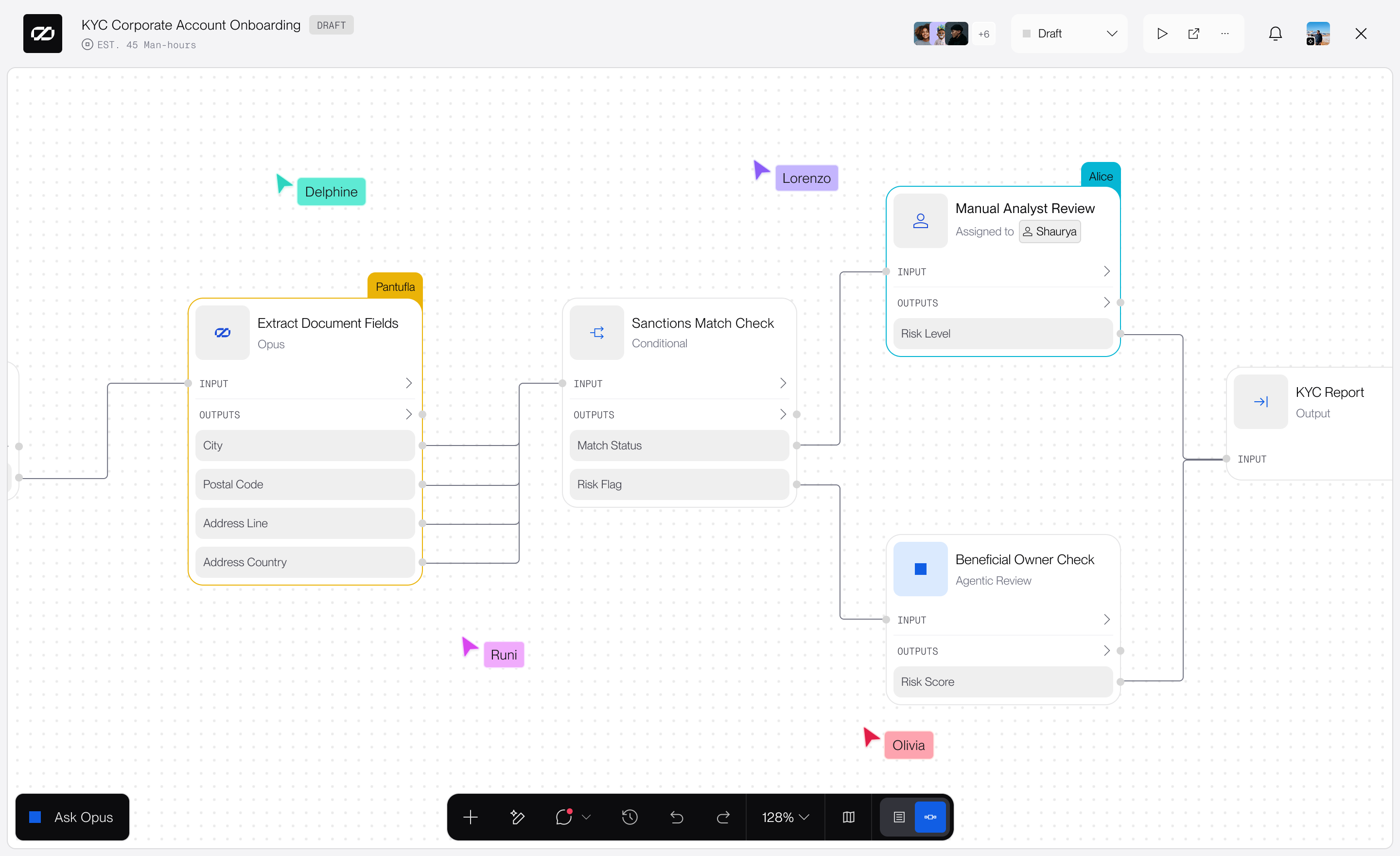
Opus uses AI to design the workflow. It doesn't improvise once the workflow is running. Every run follows the same approved steps, which is what close and controls evidence require. Actions are versioned and logged, exceptions go to your people, and your approval limits stay as they are.
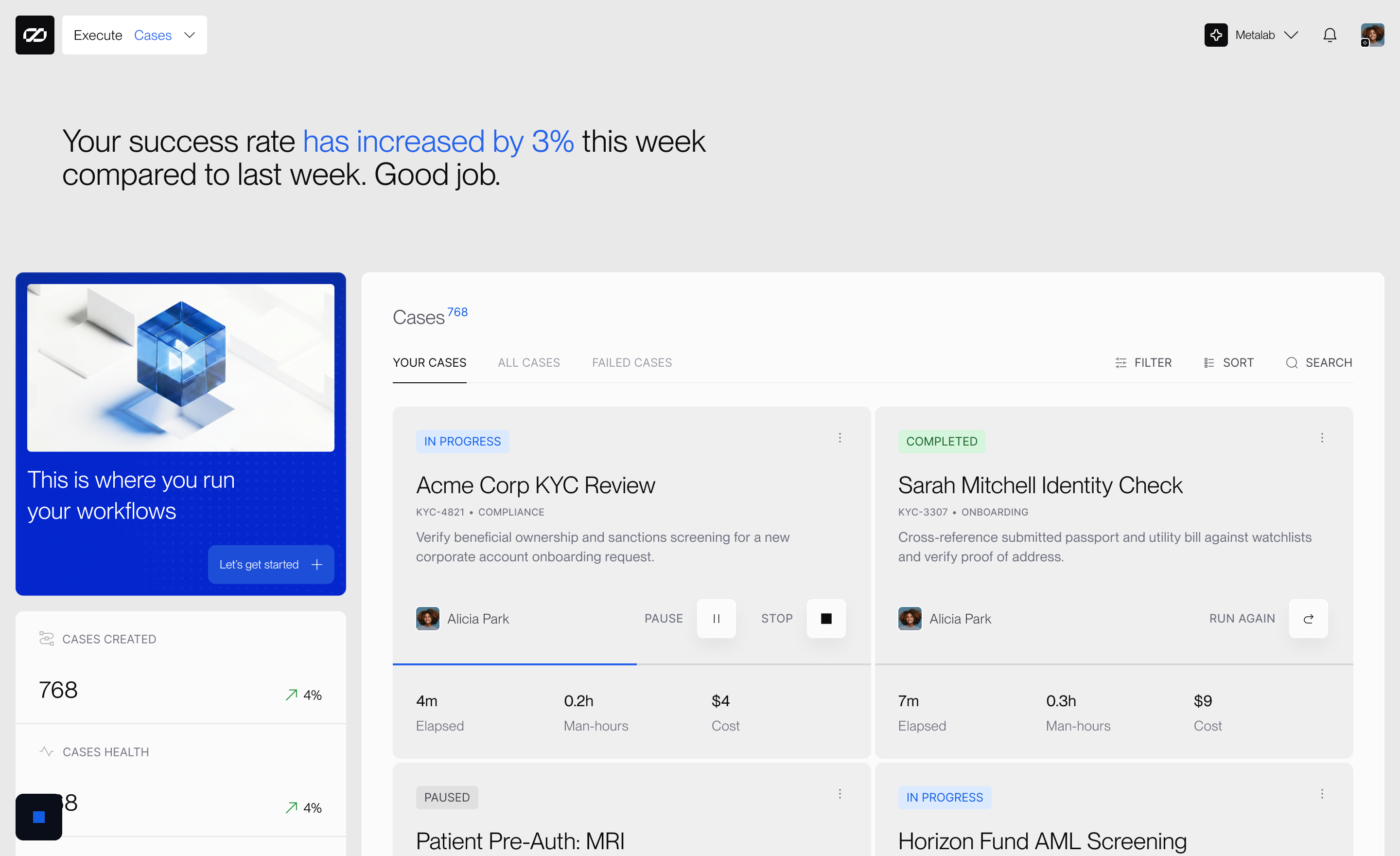
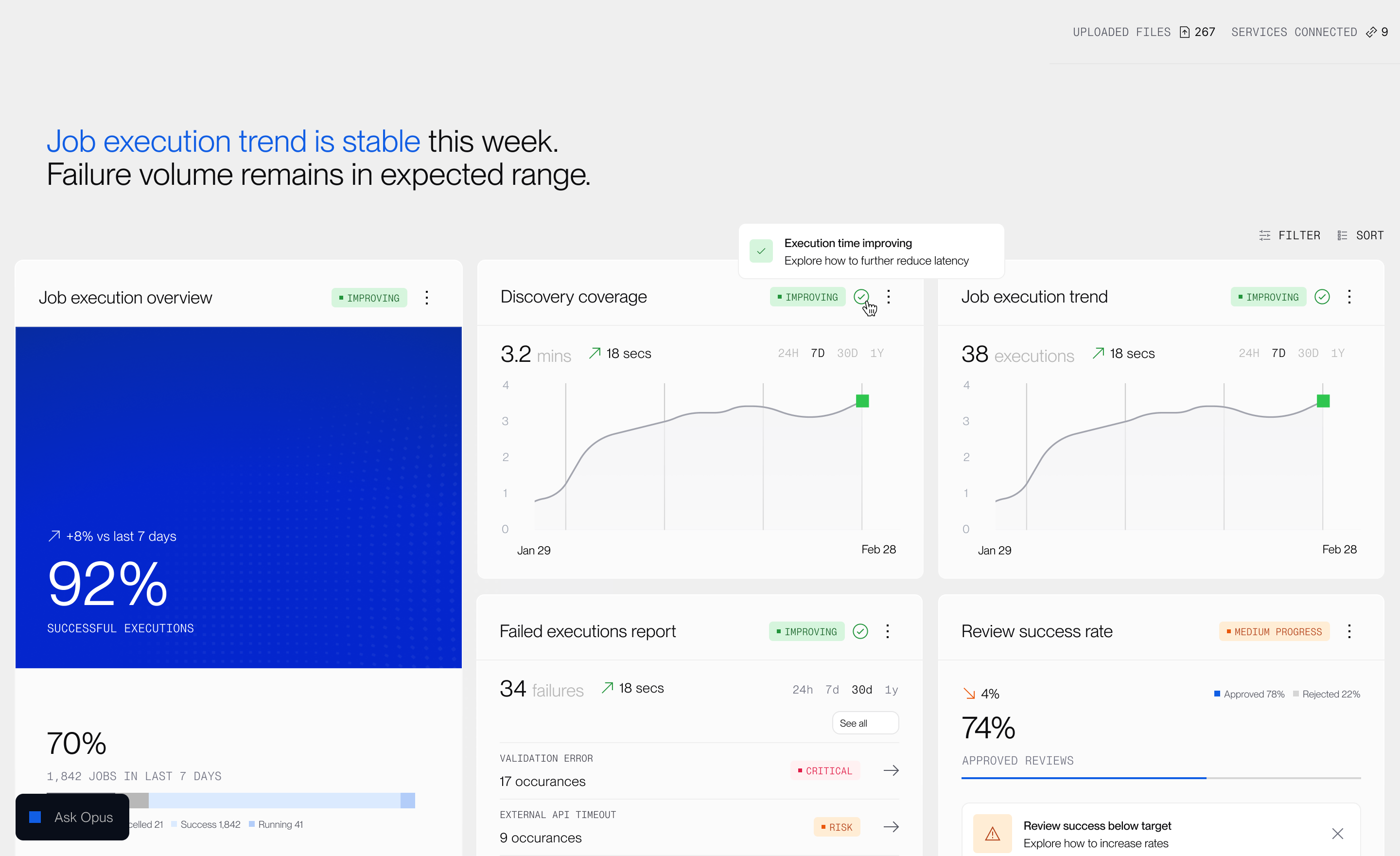
Every workflow run is tracked: durations, throughput, and what the agents learned. Opus flags recurring errors and suggests improvements, so a workflow that keeps hitting the same exception gets fixed rather than worked around. It also checks each workflow against your internal policies, continuously, not only when it was built.
Built for sensitive financial data, deployable in your own cloud, private cloud, or on-prem, with every action logged and auditable.
No. Opus is an operating layer on top of your existing stack — your ERP, sub-ledgers and the rest — designed to integrate, not replace.
Every action is logged and time-stamped, with a person on the decisions that matter and your existing controls and approvals preserved.
No. Opus is model-agnostic — use any model, or several.
No. Start with one workflow, run it in parallel with a person in the loop, and scale once it's proven.
You do. Opus routes exceptions to your finance team and logs every step, so the numbers and the sign-offs stay with your people.
Book a working session and we'll map one of your workflows live.