FNOL intake & triage
TodayClaims logged and routed by hand.
OpusCaptures the claim, checks what's missing, routes to the right handler.

Opus maps how your claims operation really runs, then rewires the work worth handing to AI, with a person on every decision that matters.

Some examples of the high-volume processes teams hand to Opus, each one live in weeks.
TodayClaims logged and routed by hand.
OpusCaptures the claim, checks what's missing, routes to the right handler.
TodaySuspicious claims caught late, if at all.
OpusScreens every claim at FNOL, flags anomalies, routes to investigation with the evidence.
TodayFiles checked page by page against policy.
OpusValidates the file, interprets coverage, and drafts the decision with rationale for a human to sign off.
TodaySubmissions read and summarised by hand.
OpusSummarises the submission, retrieves policy wording, drafts a recommendation and rationale.
TodayApplications completed field by field.
OpusPre-fills and validates in real time, flags gaps, produces a ready-to-submit application.
TodayPayments and exceptions managed by hand.
OpusExecutes payments, reconciles, and routes only the breaks, with every step logged.
Your operation runs across a dozen systems, on documents, under rules you have to evidence. You can see what it produces: cycle times, cost per claim, leakage. You can't see which steps absorb the effort, where handlers decide differently on similar files, or which change would move the number. So AI programmes start on a hunch. You pay first, and find out later.
Opus shows you which parts of the workflow AI can take on, and which should stay with your team, drawing on a Large Work Model™ trained on millions of real business processes. You can automate the process as it stands, or improve the flow while you do it.
Then you set the rules. What clears without a handler, what gets referred, and at what value. You approve or reject every step, so no system decides what gets paid out without your say-so.
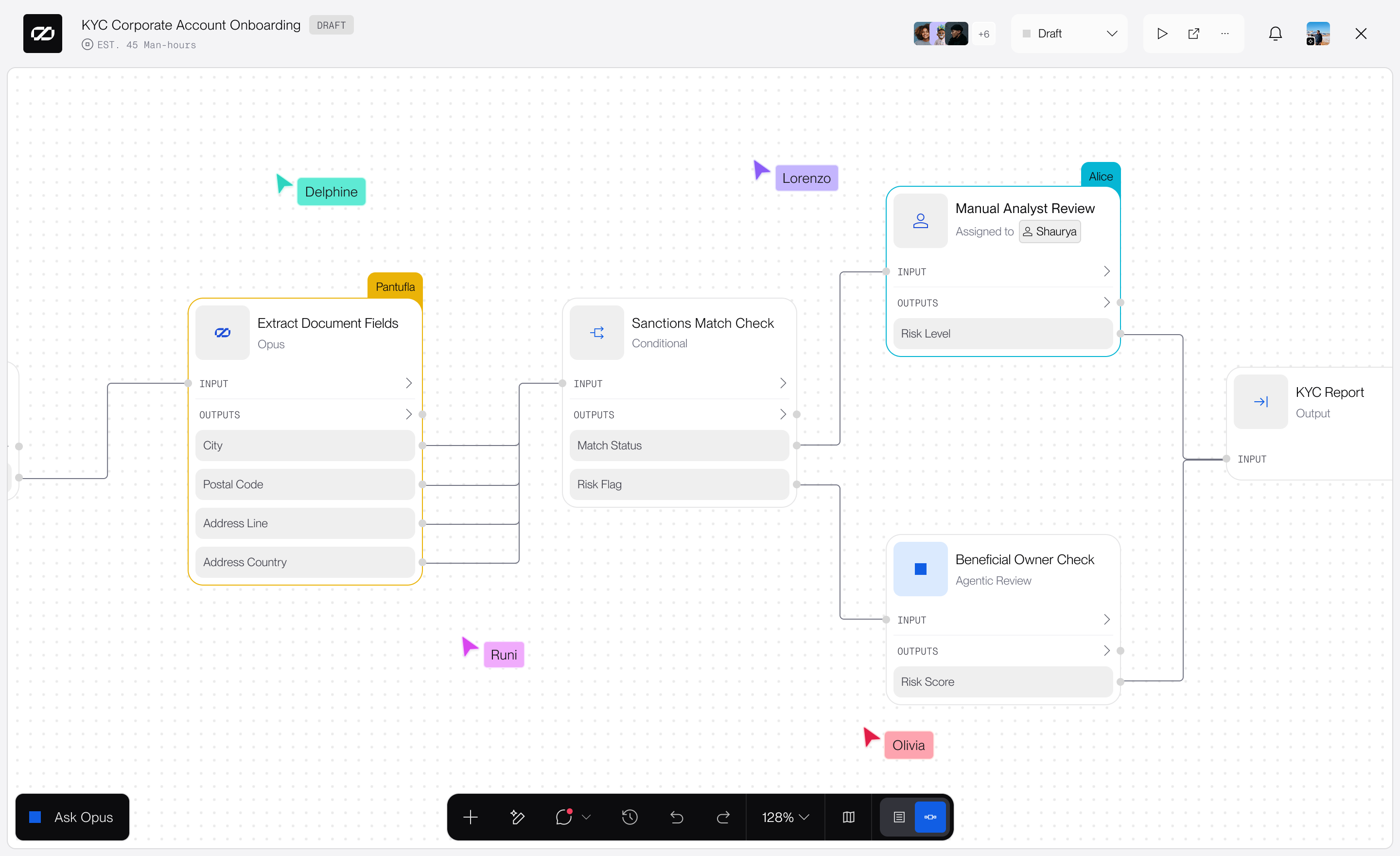
Opus uses AI to design the workflow, not to improvise while it runs. Whoever picks up the file, the same approved steps get followed, and the exceptions you flagged still go to a person. Actions are versioned and logged, and delegated authority stays exactly where you set it. So you can show exactly how any claim was decided, years later.
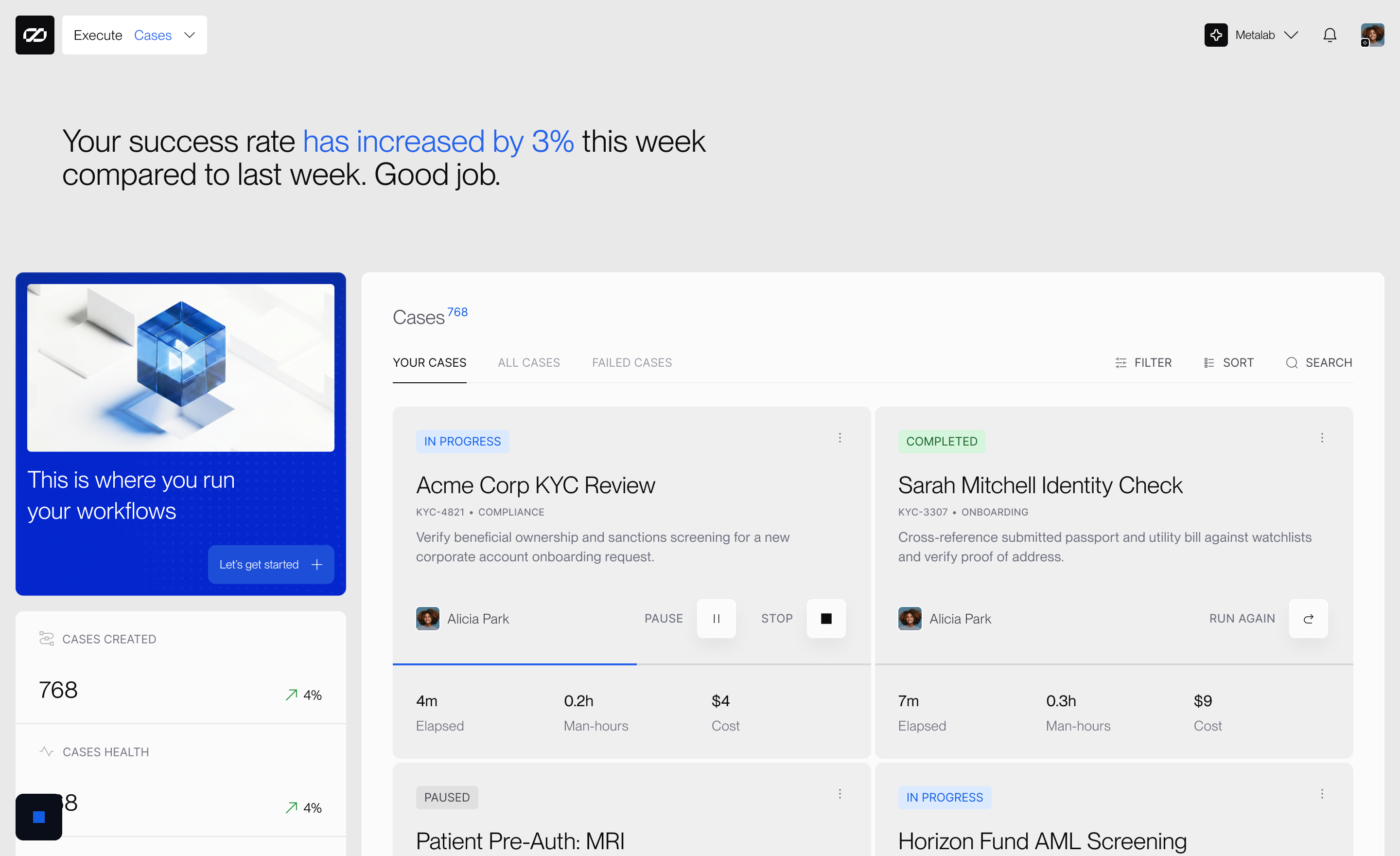
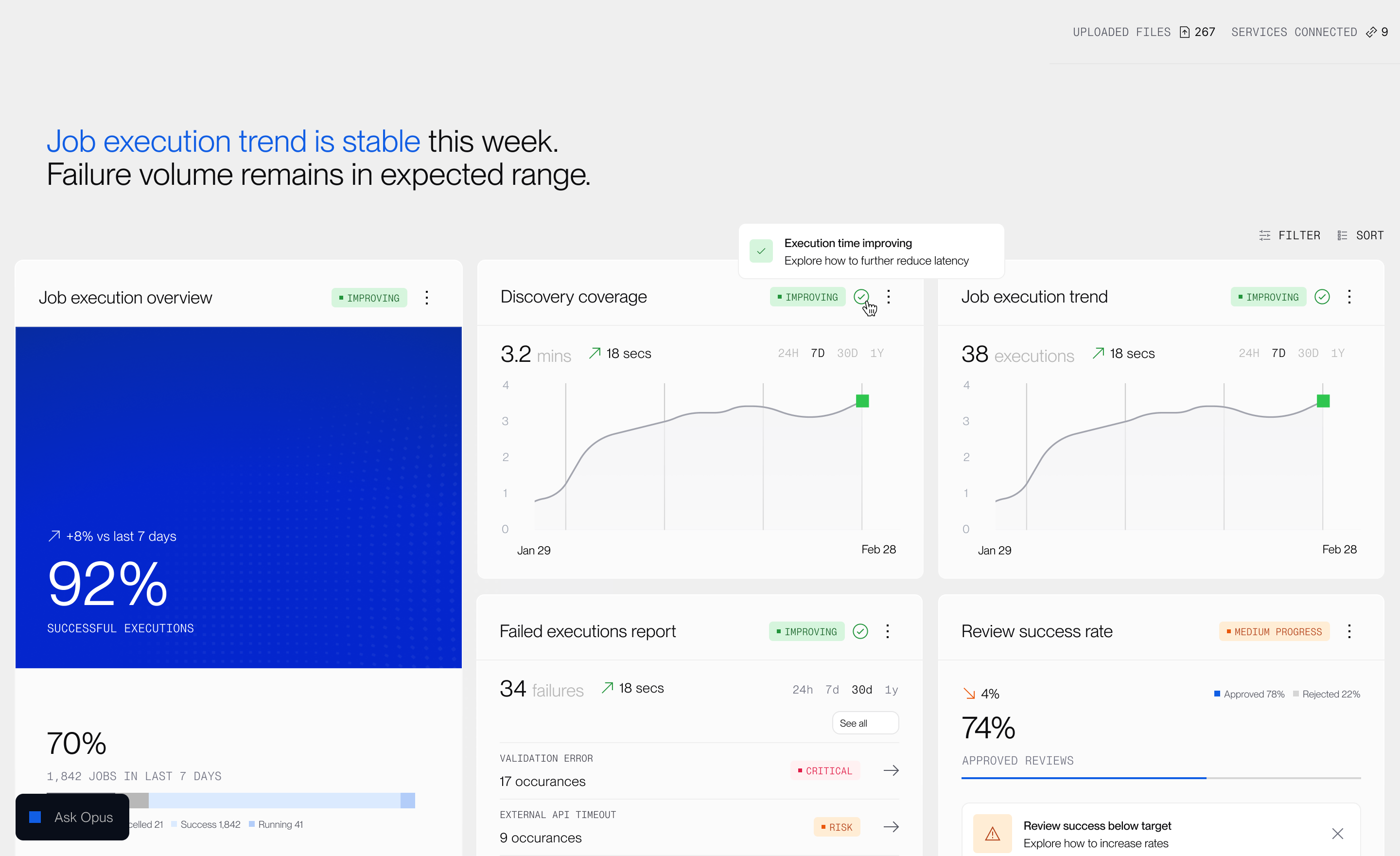
Every run is tracked: cycle times, throughput, referral rates, where exceptions cluster. When the same step keeps failing, Opus flags it and suggests a change, rather than leaving your team to work around it for another quarter. And as your volumes, rules and exceptions shift, it shows you what has drifted, so the workflow keeps matching the work instead of slowly falling behind it.
Built for regulated policy and claims data, deployable in your own cloud, private cloud, or on-prem, with every action logged and auditable.
No. Opus is an operating layer on top of your existing stack — policy admin, claims and the rest — designed to integrate, not replace.
No. Opus is model-agnostic — use any model, or several.
No. Start with one workflow, run it in parallel with a person in the loop, and scale once it's proven.
You do. Opus routes exceptions to your handlers and underwriters and logs every step, so control and accountability stay in-house.
Yes. Opus drafts the recommendation and the rationale; a person signs off on every claim and underwriting decision that counts.
Book a working session and we'll map one of your workflows live.